
What is occupational therapy?
What's occupational therapy?
Occupational therapy helps you live your best life at home, at work – and everywhere else. It’s about being able to do the things you want and have to do. That could mean helping you overcome challenges learning at school, going to work, playing sport or simply doing the dishes. Everything is focused on your wellbeing and your ability to participate in activities.
It’s also a science-based, health and social care profession that’s regulated by the Health and Care Professions Council.
What are occupations?
An occupation is any activity that we need, want or like to do to live and to look after our physical and mental health, and our emotional and spiritual wellbeing. We do occupations from the moment we’re born, on our own or with others.
Occupation isn’t just your job or activities of daily living. An occupation can be self-care, such as washing, eating or sleeping; productive, such as work, study, caring or domestic activities; and leisure, such as playing sports, hobbies or socialising.
We’re all different and so are the occupations that matter to us. They vary depending on our environment, interests and values, talents and skills. Our occupations also change throughout our lives.
Why do occupations matter?
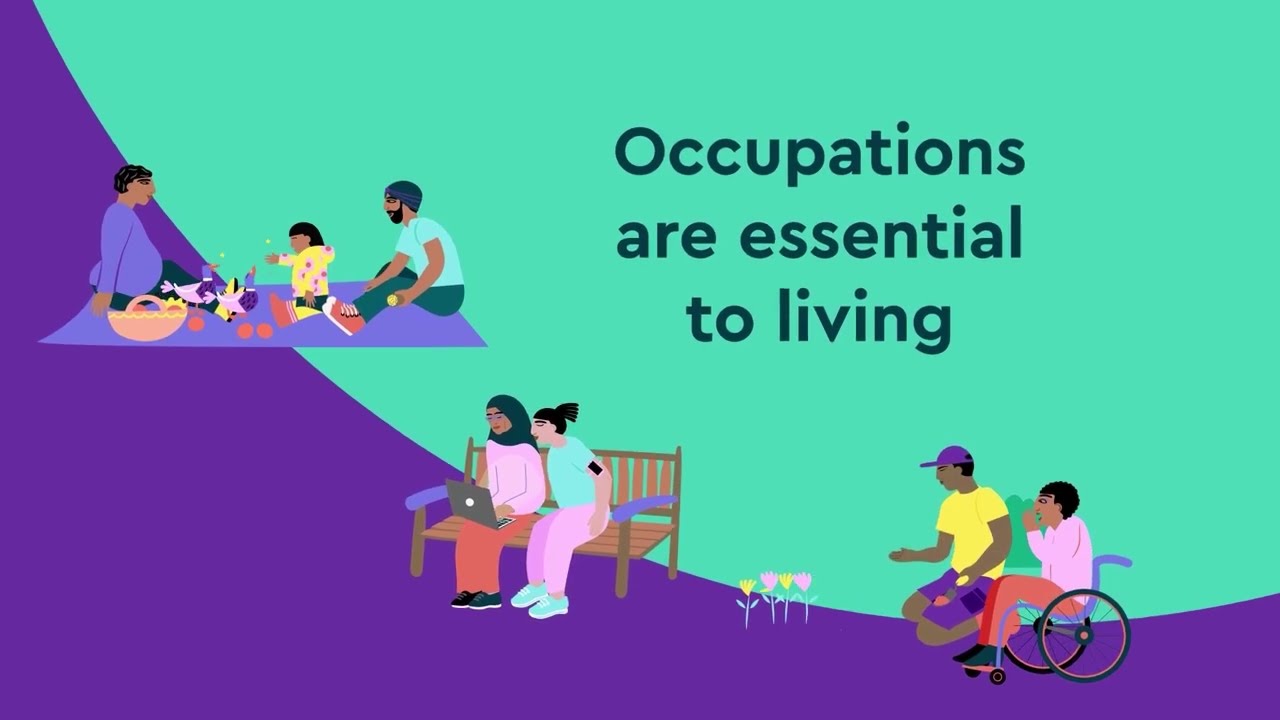
Occupations are essential to living. They give our lives meaning, purpose and structure. They help shape who we are, connect us with others and help create our identity and sense of belonging. Through occupation we enhance our health and quality of life.
Focusing on occupation leads to improvements in our ability to do the things we need and want to do, our social relationships, communication and connections as well as our mood, rest and sleep.
Occupations are particularly important when we’re going through times of change. When we can’t do an occupation anymore or we need to adjust the way we do it, because of ill health or other barriers, our sense of self and purpose may change. This is where occupational therapy comes in.
What does an occupational therapist do?
An occupational therapist helps people of all ages overcome challenges completing everyday tasks or activities – what we call ‘occupations’.
Occupational therapists see beyond diagnoses and limitations to hopes and aspirations. They look at relationships between the activities you do every day – your occupations – alongside the challenges you face and your environment.
Then, they create a plan of goals and adjustments targeted at achieving a specific set of activities. The plan is practical, realistic and personal to you as an individual, to help you achieve the breakthroughs you need to elevate your everyday life.
This support can give people a renewed sense of purpose. It can also open up new opportunities and change the way people feel about the future.
Who do occupational therapists work with?
Occupational therapists work with adults and children of all ages who have a wide range of conditions.
Most commonly, they help those living with mental health conditions, or physical or learning disabilities. And you’ll find them helping people live their best life in health organisations, social care services, housing, education and voluntary organisations.
Many occupational therapists practice independently too and work with members of the public, asylum seekers and refugees, alongside the police or fire services, or with psychiatric services.